What if reading a book could feel a little like solving a mystery?
That’s exactly the approach 6th grade ELA students at Harris Middle School are taking in Kenya McDonald’s classroom, where students are learning to read deeply, ask thoughtful questions and uncover the clues hidden within a story.
Students are currently reading Bud, Not Buddy, the 1999 historical fiction novel by Christopher Paul Curtis. The story follows 10-year-old Bud, an orphan searching for his father during the Great Depression.
As students read, they are learning about allusion - when an author makes a connection to a well-known person, place, event or idea - and examining how the allusions in Bud, Not Buddy connect the story to real historical events. These connections help students better understand the novel and the world in which Bud is living.
But the learning doesn't stop with the novel.
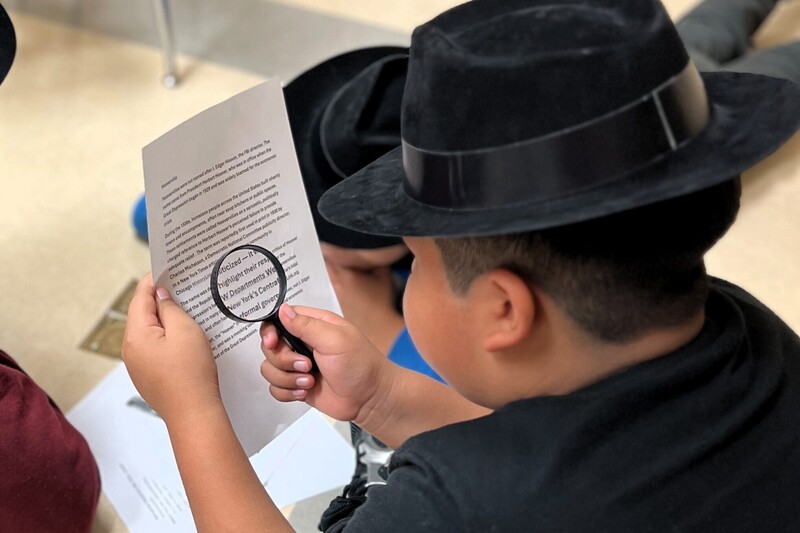
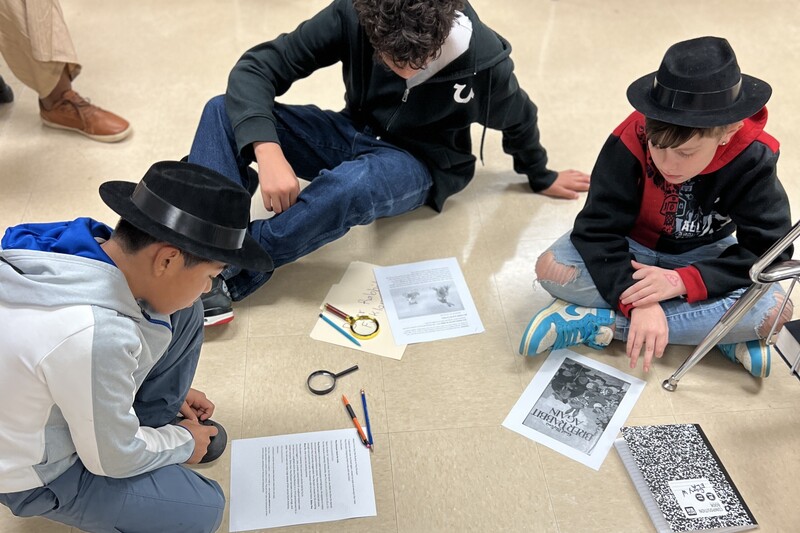
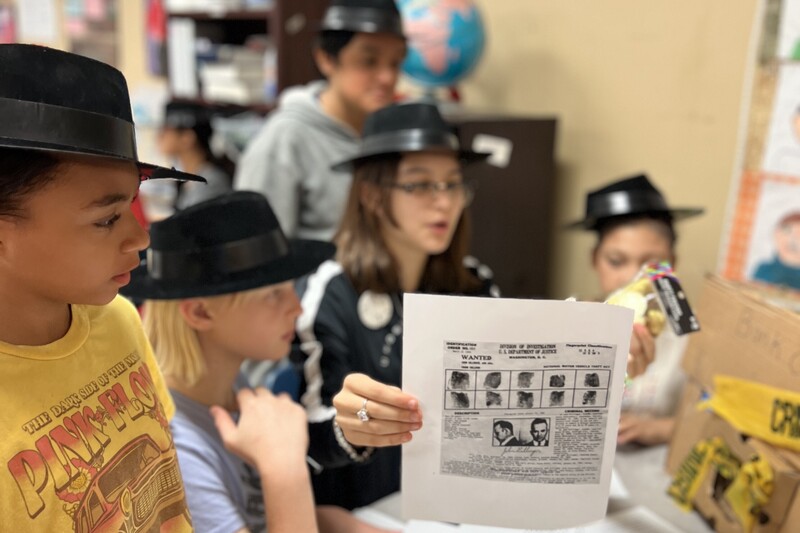
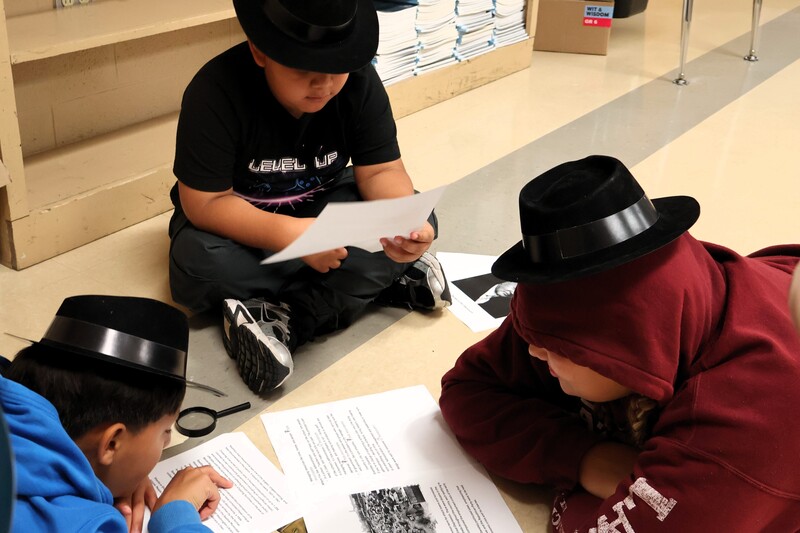
Students are also analyzing primary sources as they investigate the causes and effects of the Great Depression and explore how people coped with the challenges of the time. Throughout the process, students are encouraged to think like detectives, searching for evidence and using clues to deepen their understanding.
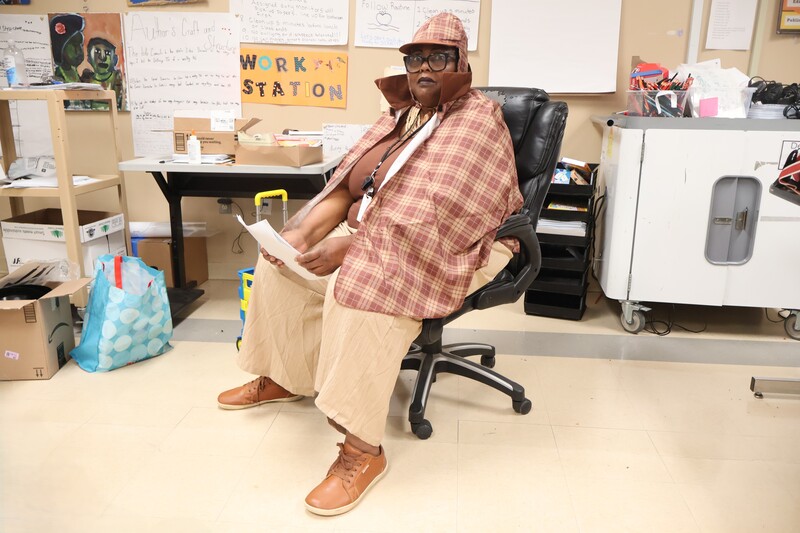
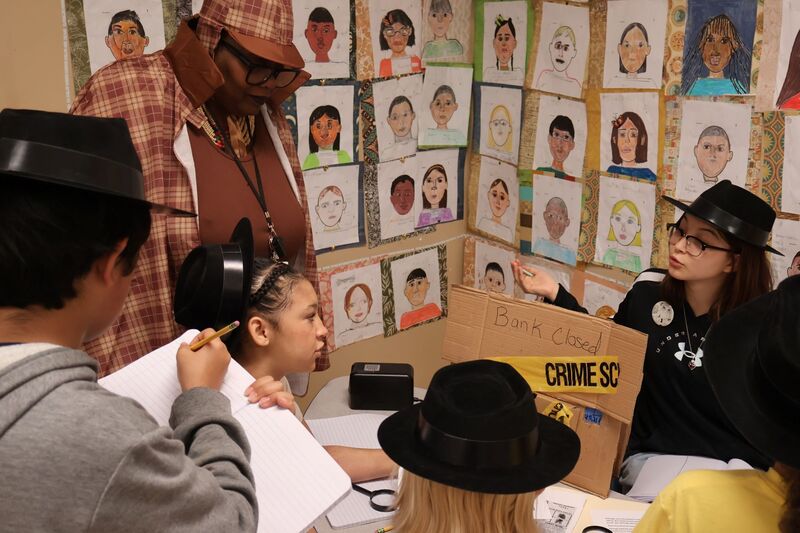
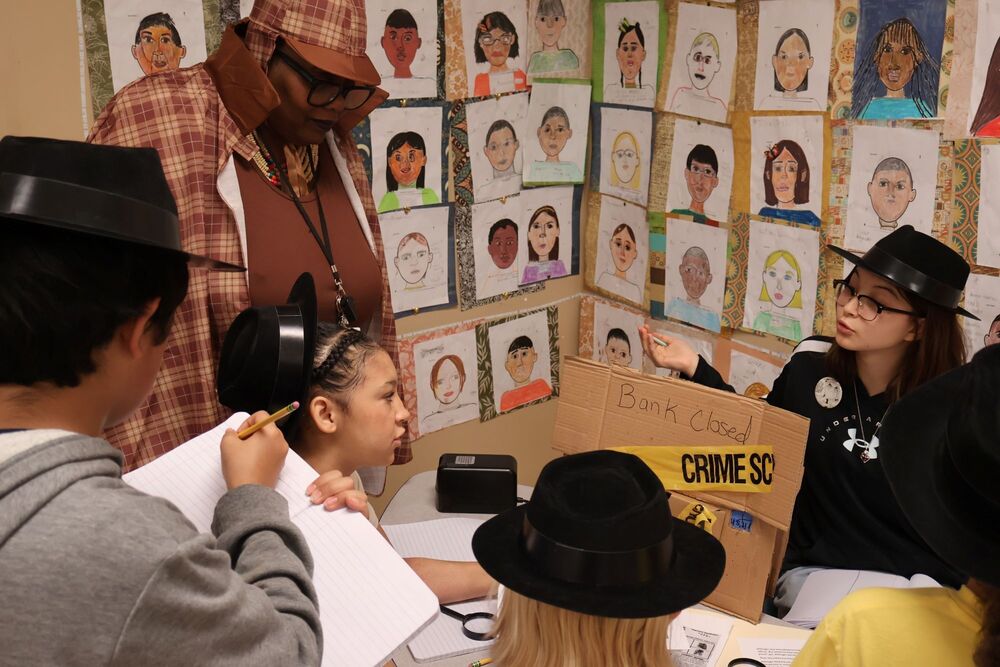
And they’re having fun doing it, some even wearing costumes and using props like the famous, fictional detective Sherlock Holmes.
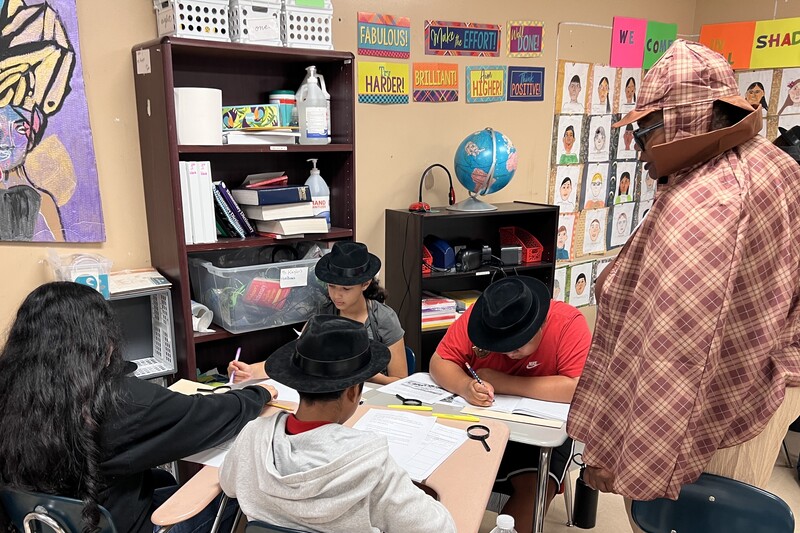
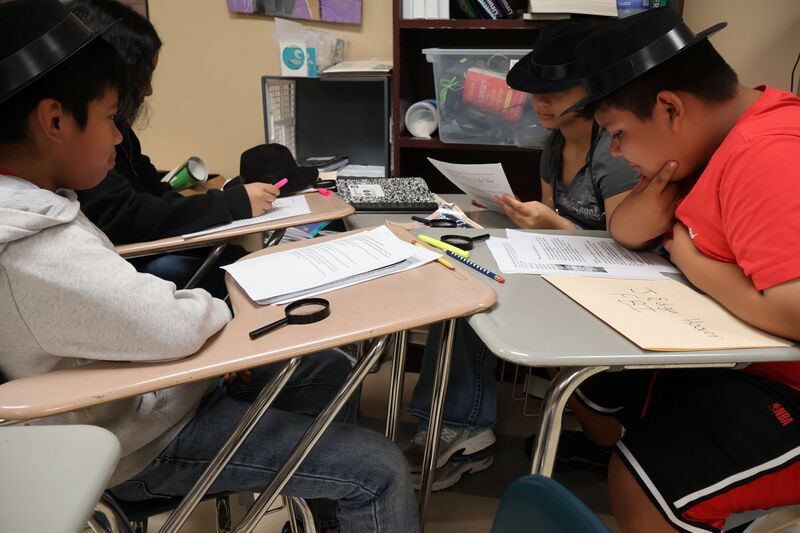
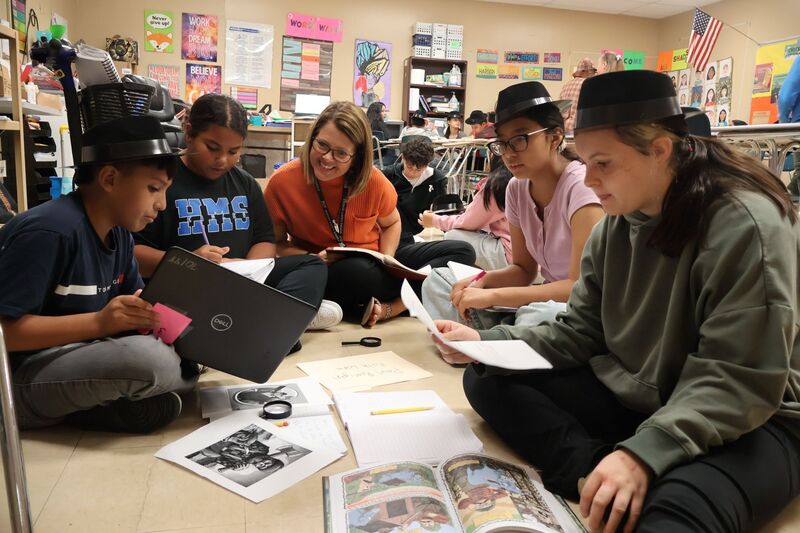
During a recent class, students worked in small groups to answer questions, discuss their thinking and dig deeper into the text. One group approached the work as a "criminal investigation," using evidence from their reading to solve the mystery.
“We like doing investigations through our reading because we get to solve a mystery,” commented one student.
Another group was building curiosity through an “I noticed” and “I wonder” approach, sharing observations and questions with one another.
“We like learning this way because it’s easier; we feed off each other and think of things we wouldn’t have thought of working alone,” said another 6th grader.
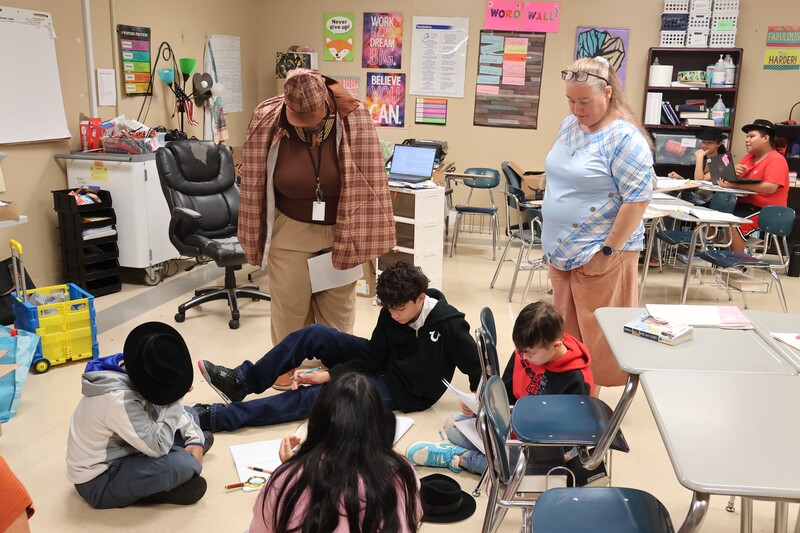
The classroom was filled with students asking one another questions, making predictions, sharing evidence and having rich conversations about what they were reading.
Perhaps one of the most meaningful things happening was the way students were looking out for one another as learners. Students weren't simply focused on finding their own answers. They were checking on their classmates by asking, “Is there anything that’s confusing you?” or letting the teacher know what another student needed.
That simple question represents an important part of learning: students helping students.
And behind it all is a teacher who is clearly passionate about making learning meaningful.
Ms. McDonald is going beyond simply teaching students what an allusion is or asking them to answer questions about a novel. She is creating an experience. She is finding ways to make challenging academic concepts approachable, giving students permission to be curious and turning a reading lesson into an investigation. By bringing creativity, energy and a little fun into the classroom, she is helping students see that learning can be both rigorous and enjoyable.
As the groups worked, teachers moved throughout the classroom, listening to conversations, observing student thinking and guiding discussions when needed. Rather than simply providing answers, they were helping students find the evidence and reasoning they needed to get there themselves.
This is one of the things that makes public schools special: students learn alongside one another, supported by educators who know that great teaching is about more than covering a standard. It’s about finding ways to reach students, spark their curiosity and help them discover what they are capable of doing.
In a public school classroom, a teacher can take a required learning goal and turn it into a detective investigation. Students can bring different ideas, experiences and perspectives to the same text. They can learn from one another, challenge one another and celebrate one another’s thinking.
And that’s happening at Harris Middle School.
In Ms. McDonald’s classroom, reading isn't just about getting to the end of a book. It's about following the clues, asking the right questions and discovering what the story has to teach us.
And these Harris Middle School students are proving that sometimes, the best way to become a better reader is to become a detective.